Who is shaping a more sustainable future for Powder Metallurgy?

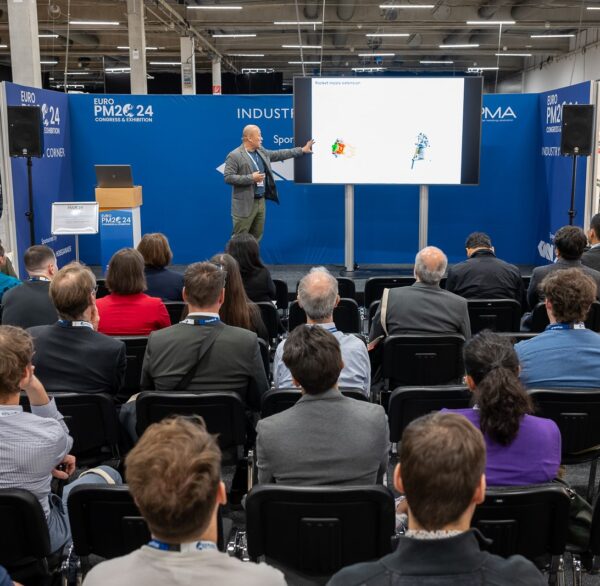
  • Monday 12 October | 15:10–15:55

  • PM Forum | Exhibition Area

The EPMA Sustainability Award celebrates companies turning sustainability ambitions into meaningful action. From reducing environmental impact and improving energy efficiency to advancing circularity, responsible sourcing and long-term sustainability strategies, the award recognises organisations leading the way towards a more responsible Powder Metallurgy industry.

Meet the 2026 Shortlisted Companies

Five outstanding companies have been shortlisted for the 2026 EPMA Sustainability Award:

Imerys has committed to reducing Scope 1 and 2 emissions by 42% and Scope 3 emissions by 25% by 2030 through SBTi-validated targets. Its sustainability strategy combines operational decarbonization with product innovation, including the SU-NERGY project, which incorporates biomass-based raw materials into synthetic graphite to significantly reduce product carbon footprints.

The company uses Life Cycle Assessment extensively and aims to assess most of its product portfolio according to ISO standards by 2030. Energy reduction initiatives are driven through the I-Nergize transformation program, while social priorities include diversity and inclusion, employee development, safety improvement, community engagement, and responsible business conduct.

Hilti has already achieved carbon neutrality for its own operations and business travel and is pursuing net-zero emissions across its full value chain by 2050. Its climate strategy includes renewable electricity sourcing, electrification of products and vehicle fleets, circular economy initiatives, sustainable buildings, supply chain decarbonization, and logistics optimization.

More than 75% of the product portfolio is covered by Life Cycle Assessments. Hilti uses renewable electricity globally and continues to improve energy efficiency through renewable energy generation and optimized facilities. The company also promotes gender equality, employee development, workplace safety, and community involvement through extensive volunteering programs.

Höganäs has developed an ambitious climate roadmap with the objective of reaching net zero for Scope 1 and 2 emissions by 2030, upstream Scope 3 emissions by 2037, and the full value chain by 2040. Key actions include replacing fossil carbon with biochar in sponge iron production, increasing biogas usage, sourcing fossil-free electricity, and developing fossil-free sponge iron technologies.

The company uses Life Cycle Assessment to document environmental performance and collaborate with customers on sustainability improvements. Additional initiatives focus on energy efficiency, renewable energy deployment, gender diversity, health and safety, talent development, and active engagement with local communities.

GKN Powder Metallurgy has committed to achieving net-zero greenhouse gas emissions across its value chain by 2050, with a target to reduce Scope 1, 2 and 3 emissions by 90% from a 2022 baseline. The company’s decarbonization approach combines renewable electricity procurement, solar installations, equipment electrification, energy efficiency improvements, and supply chain engagement.

Life Cycle Assessments are used to support emissions reduction activities and environmental decision-making. GKN PM also promotes diversity and inclusion through measurable targets and dedicated governance structures. The company operates extensive safety improvement programs, employee development initiatives, apprenticeship schemes, and community support activities across its global operations.

ARBURG has established a comprehensive sustainability strategy with Science Based Targets (SBTi), aiming to reduce Scope 1 and 2 emissions by 42% and Scope 3 emissions by 25% by 2030, while targeting net zero by 2050. The company focuses on renewable energy deployment, ISO 50001-certified energy management, continuous energy efficiency improvements, and carbon footprint measurement of its products.

The company uses renewable electricity from hydropower, solar and wind energy, and has implemented initiatives to increase rainwater use and improve resource efficiency. Sustainability is also integrated into employee development, diversity and inclusion policies, health and safety programs, and community engagement activities.

Their initiatives demonstrate the many ways sustainability is being embedded across the PM value chain, from circular materials and energy efficiency to responsible sourcing and innovative environmental strategies.


Spotlight on Sustainability

Join us at the PM Forum to discover the stories behind this year’s shortlisted companies.

The award winner will receive the EPMA Sustainability Award and present its sustainability achievements in a 10-minute presentation.

The four other finalists will each take the stage for a 5-minute “Spotlight on Sustainability” presentation, sharing their initiatives, challenges and solutions on the path towards more sustainable manufacturing.

Discover how leading companies are putting sustainability into practice and take away ideas, inspiration and practical approaches that can help accelerate responsible innovation across the Powder Metallurgy community.

Don’t miss this opportunity to celebrate the 2026 finalists and discover what sustainable leadership looks like in our industry